

Watching events unfold for our 250th Anniversary as a nation makes me wonder what the first centennial celebration looked like.
I watch the movie The Music Man, and I long to live in the days of ice cream socials, community picnics, and the patriotic tableau, whatever that is. When I think about my plans for July 4th each year, my mind wanders to scenes of old-fashioned patriotism, and I remember singing “My Country, Tis of Thee” and “America the Beautiful” in elementary school. Thank goodness for music teachers like Mrs. Sheaffer, who taught us all to sing.
Anniversary of a Nation
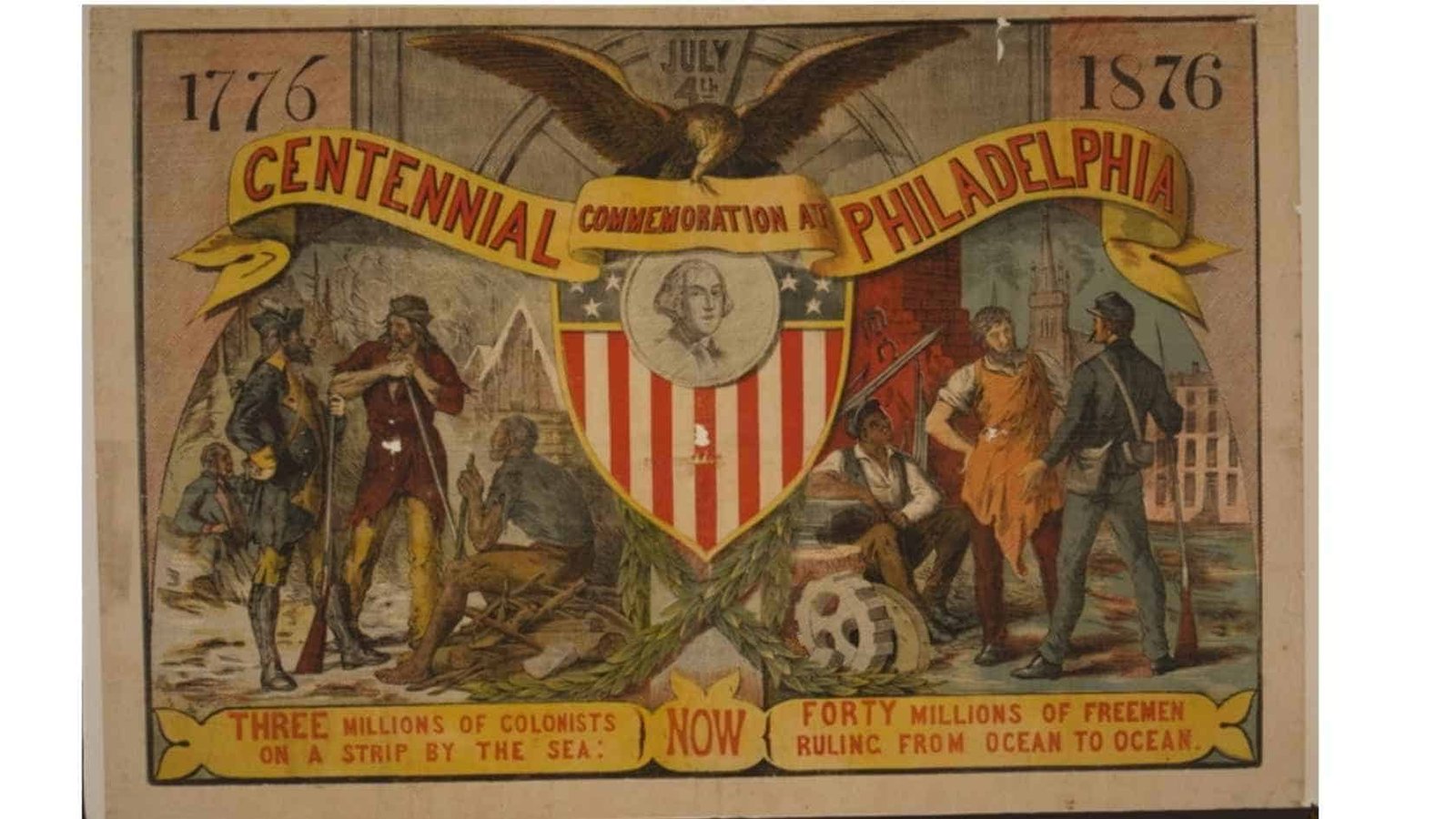
Following President Ulysses S. Grant’s proclamation, July 4, 1876, was the Centennial Anniversary of the Nation. The 37-starred flag appeared everywhere. Small towns and large cities held their own celebrations, including parades, public readings of the Declaration of Independence, community picnics, cannon fire, and fireworks. Colorado had more reason than most states to join in the festivities. It was slated to become the 38th state on August 1, 1876.
A Six-Month Celebration
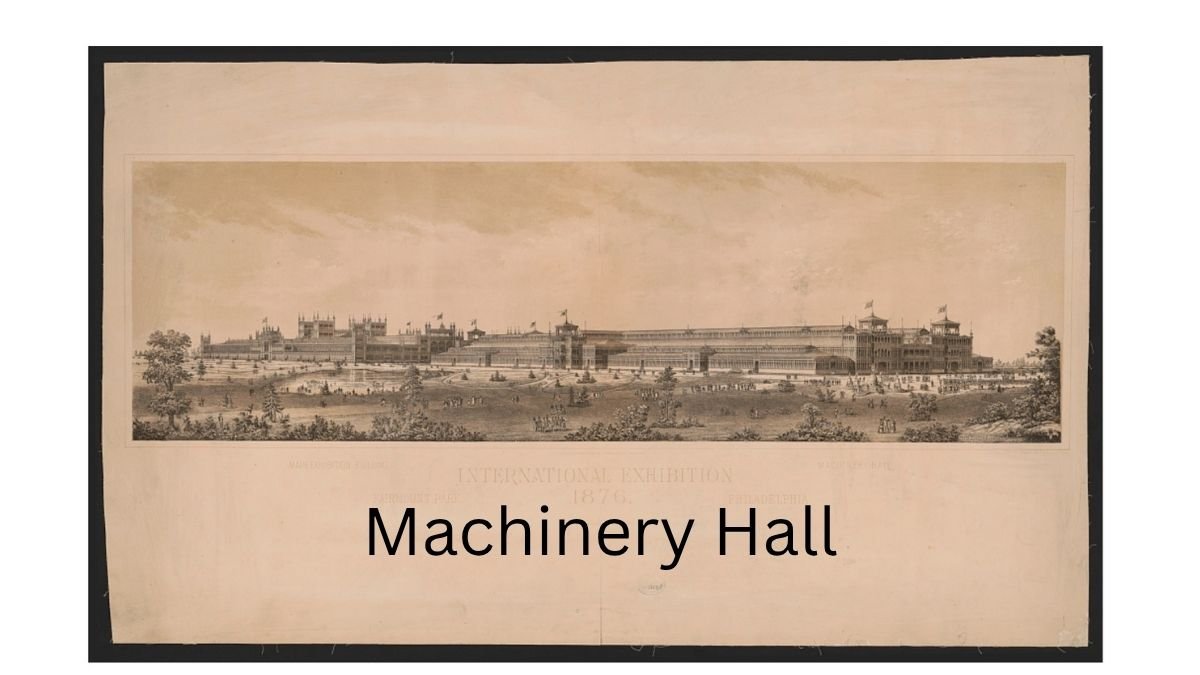
However, the main event of 1876 was the first Centennial Exposition, held from May 10 to November 10 at Fairmount Park in Philadelphia. (Some of the 2026 FIFA World Cup matches will be held in the same location.) This was the first of many World Fairs on U.S. soil. The Exposition showcased America’s growing industrial strength, new inventions, and financial success.
Since more than half of the visitors were from across the ocean, the Exposition changed the world’s view of the United States as an “underdeveloped and second-rate country at the outer fringe of Western civilization,” according to the American Heritage magazine. Many immigrants took notice and set their sights on the country’s welcoming arms.
Blowing Off Steam
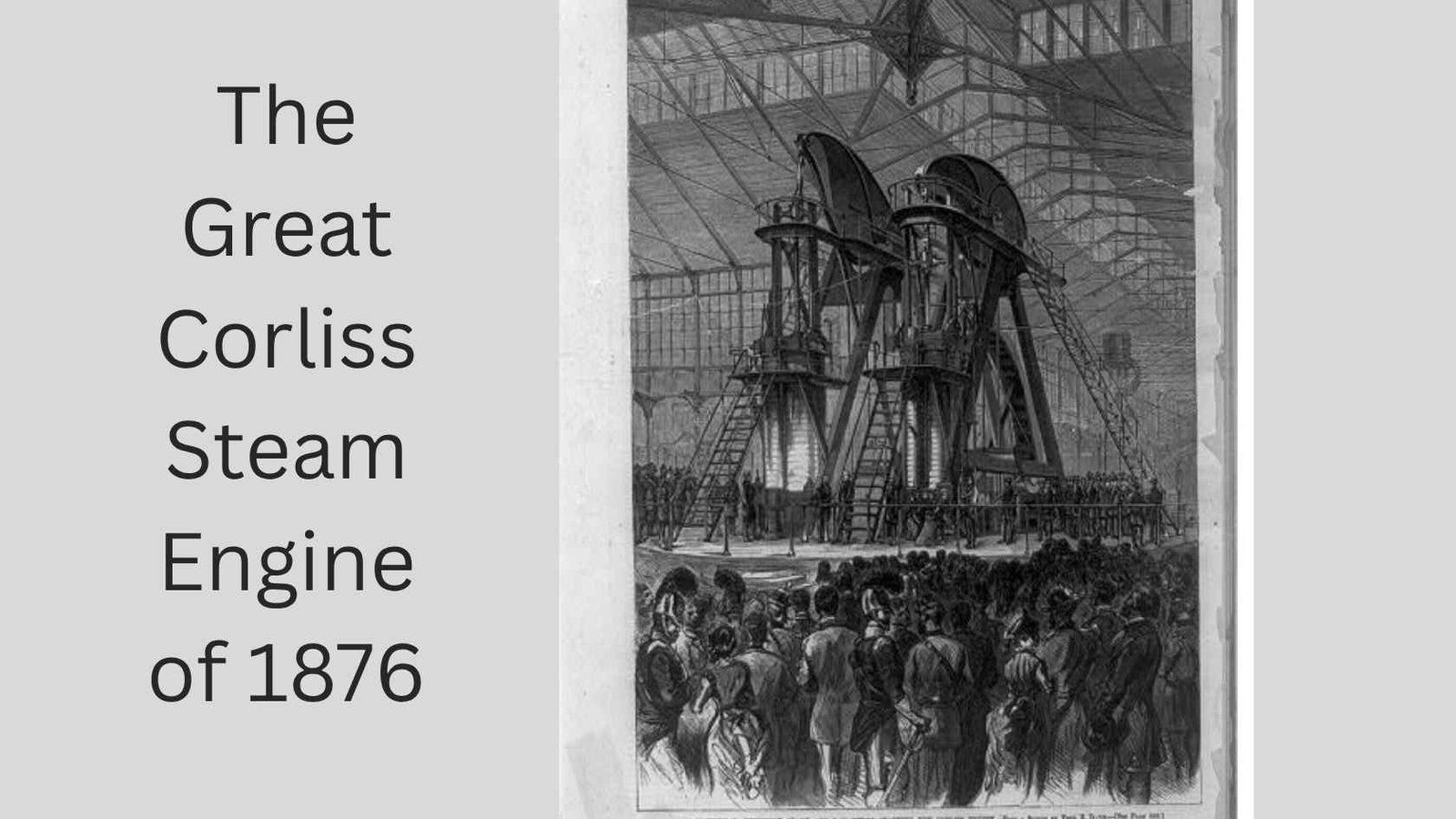
Memorial Hall exhibited artwork. Horticultural Hall contained exotic plants. Machinery Hall showcased the 40-foot-high Corliss Steam Engine. This ceremonial event sparked an international grudge against the First Lady. Julia Grant was slighted by not being allowed to help start the Corliss steam engine that powered the exhibits.
Mrs. Grant wrote, “I, the wife of the President of the United States--I, the wife of General Grant--was there and was not invited to assist at this little ceremony…I wonder what could have prompted this discourtesy to the wife of the President of the United States and at the same time, this honor to the wife of a foreign potentate.
That honor went to the Empress of Brazil. The Emperor, Dom Pedro II, and his wife were visiting. Empress Christina was asked to place her hand on the valve to start the Corliss engine.
Other innovations on display in Machinery Hall included Alexander Graham Bell’s new telephone, the Remington #1 typewriter, Thomas Edison’s automatic telegraph system, and ice cream. General LeRoy Stone’s steam-powered monorail carried visitors between buildings. The Wallace-Farmer Dynamo powered three electric lights, inspiring Edison to begin work on his own model of a light bulb. John A. Roebling & Sons displayed the 5 3/4-inch-diameter steel cable that would later support the Brooklyn Bridge (1883). Heinz Ketchup and Hires Root Beer each made an appearance. A novelty fruit, little known to most U.S. citizens, was sold individually wrapped in foil for 10 cents, introducing non-city folk to the banana.
Not For Everyone
The first Centennial Exposition was a stepping stone toward bringing the North and South together. House Representative, pastor, and newspaper editor Richard Cain supported the $3 million bill to fund the Exposition. Cain said the Exposition would bring about “healing the wounds caused by war.” However, southern states threatened to withdraw from the endeavor if exhibitions were hosted by black-owned industries. Native Americans were not included, giving the impression that America’s first citizens were a dying breed.
Women were included, but suffragists were forbidden. Nevertheless, activists Susan B. Anthony and Elizabeth Cady Stanton made an unannounced appearance and read their “Declaration of Rights of the Women of the United States” aloud.
It stated, “We ask of our rulers for this hour no special favors, no special privileges, no special legislation. We ask justice, we ask equality, we ask that all the civil and political rights that belong to citizens of the United States, be guaranteed to us and our daughters forever.”
It would take another 44 years before women were granted the right to vote.
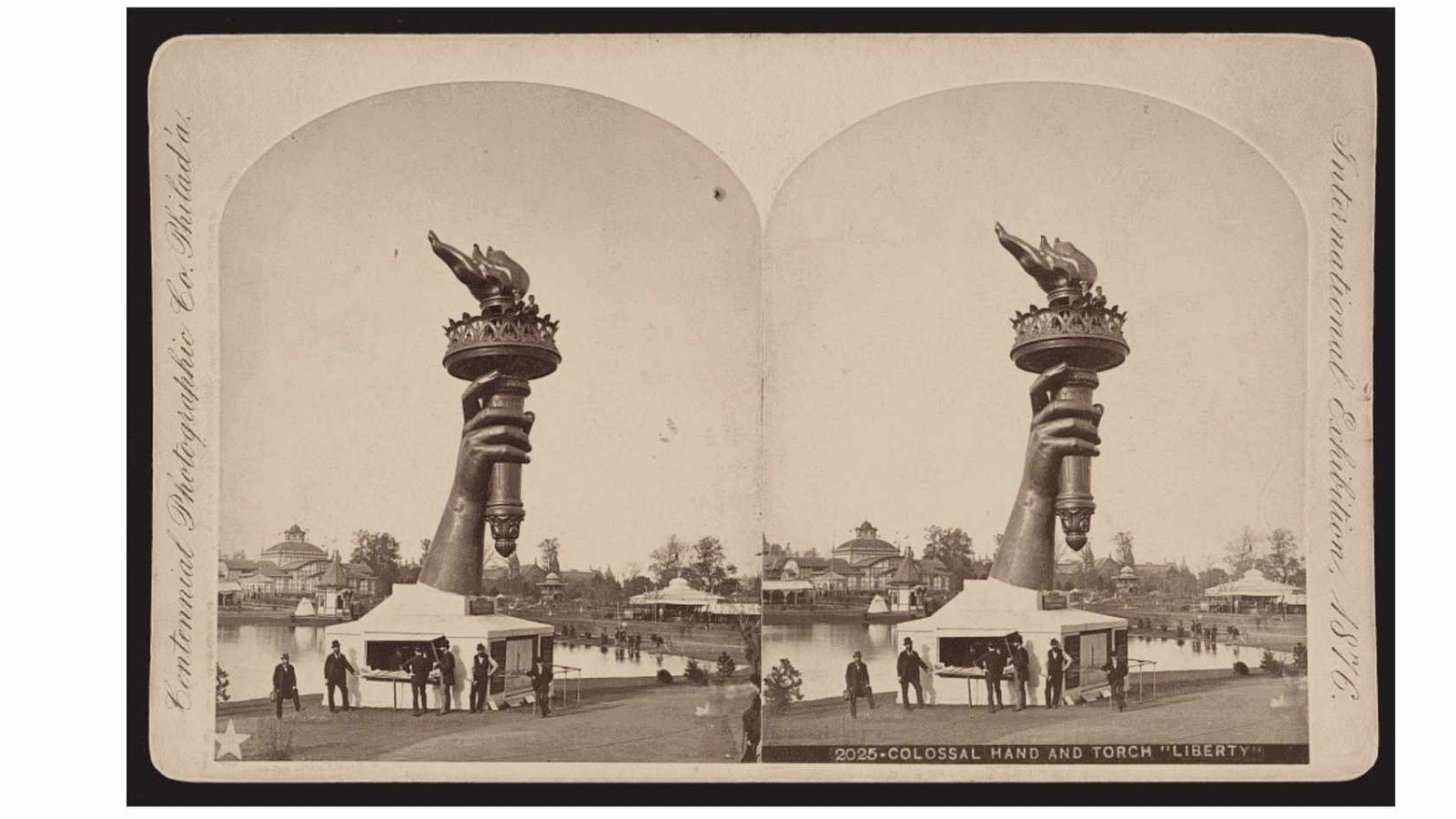
Give Us a Hand
One of the most unusual appearances came from France. The hand and torch of Frédéric Auguste Bartholdi’s gift were the first parts of the Statue of Liberty to be built and shipped to the U.S. The hand’s appearance at the Exposition helped raise funds for the statue’s pedestal. Hand and torch then moved to Madison Square Gardens in New York, where they continued to raise money for the next six years. The hand and torch joined the rest of Lady Liberty in 1886.
Reading about the slights, exclusions, and political controversies surrounding the first Centennial celebration of our country makes me realize that life may not have been as lovely as portrayed in The Music Man. If I can stick around for the Tricentennial in a few years, maybe things will go back to the Golden Age of my imagination.
Works Cited
“This Great Gathering of the Nation”: Black Representatives and the 1876 Centennial Celebration | US House of Representatives: History, Art & Archives. @USHouseHistory, 2026, history.house.gov/Blog/2026/February/2-27-Great-Gathering/.
“1876 – America Celebrates 100 Years! | Wheaton, IL.” Wheaton.il.us, 2026, www.wheaton.il.us/1417/1876-America-celebrates-100-years. Accessed 1 July 2026.
Brett Lithographing Co. Centennial building. General view. Centennial building, Machinery Hall. Sunset view / Howe. New York: Brett Litho. Co. Photograph. Retrieved from the Library of Congress, <www.loc.gov/item/93517424/>.
Centennial commemoration at Philadelphia July 4 -1876. Photograph. Retrieved from the Library of Congress, <www.loc.gov/item/2001695178/>.
Centennial Photographic Co. (ca. 1876) Colossal hand and torch "Liberty". Philadelphia, Pennsylvania, ca. 1876. Philada.: Centennial Photographic Co. [Photograph] Retrieved from the Library of Congress, https://www.loc.gov/item/97502738/.
City. “PhillyHistory - Detail View.” Phillyhistory.org, 2026, www.phillyhistory.org/PhotoArchive/detail.aspx?ImageId=98325. Accessed 1 July 2026.
Davis, Theodore R., Artist. Our centennial--President Grant and Dom Pedro starting the Corliss engine / from a sketch by Theo. R. Davis. Photograph. Retrieved from the Library of Congress, <www.loc.gov/item/89706312/>.
Fitch, Nancy, and Charles Flanagan. “America at the Centennial | Classroom Materials at the Library of Congress | Library of Congress.” Library of Congress, Washington, D.C. 20540 USA, www.loc.gov/classroom-materials/america-at-the-centennial/.
International Exhibition, main exhibition building, Machinery Hall. [Philadelphia: Publisher Not Transcribed] Photograph. Retrieved from the Library of Congress, <www.loc.gov/item/2018695476/>.
Kennedy, Lesley. “How Americans Celebrated the Centennial in 1876 | HISTORY.” HISTORY, 3 June 2026, www.history.com/articles/american-centennial-1876-celebrations.
NYC DOT. “NYC DOT - Brooklyn Bridge.” Www.nyc.gov, 2025, www.nyc.gov/html/dot/html/infrastructure/brooklyn-bridge.shtml.
“President Grant and the 1876 Centennial Exposition in Philadelphia (U.S. National Park Service).” Www.nps.gov, 2022, www.nps.gov/articles/000/president-grant-and-the-1876-centennial-exposition-in-philadelphia.htm.
Puckett, John. “West Philadelphia Collaborative History - the Centennial Exposition of 1876: An Evolving Cultural Landscape.” Collaborativehistory.gse.upenn.edu, 2026, collaborativehistory.gse.upenn.edu/stories/centennial-exposition-1876-evolving-cultural-landscape.
“The Fourth of July in 1876.” Kimberly Keagan, Historical Romance, 2025, www.kimberlykeagan.com/the-fourth-of-july-in-1876.html. Accessed 1 July 2026.
Wikipedia Contributors. “Centennial Exposition.” Wikipedia, Wikimedia Foundation, 15 Sept. 2019, en.wikipedia.org/wiki/Centennial_Exposition.
yansandler. “How the 1876 Centennial Exposition Shaped the American Dream and Immigration - MyHeritage Blog.” MyHeritage Blog, 13 May 2026, blog.myheritage.com/2026/05/how-the-1876-centennial-exposition-shaped-the-american-dream-and-immigration/. Accessed 1 July 2026.
More Historical Articles
