

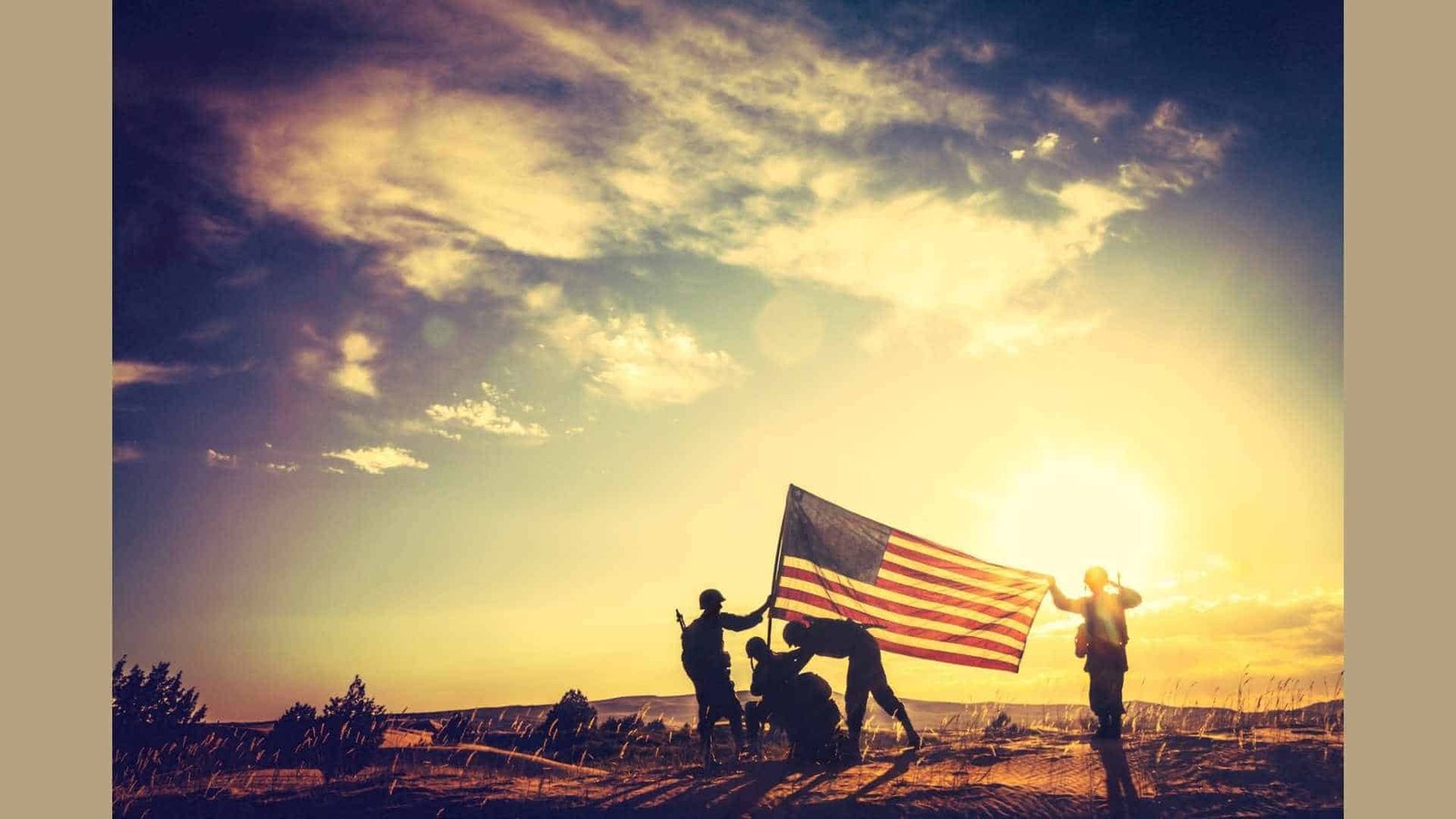
The Doughboy nickname for American infantry soldiers dates back to the Mexican-American War in the late 1840s. Theories about the term’s origin include tales of adobe dust, clay used for cleaning, and the shape of buttons, but historians remain uncertain about its beginnings. Today, when you mention “Doughboy,” we picture a giggling, pudgy pale guy with a squishable belly button. The World War 2 Doughboy was something else entirely.
Training the Infantryman
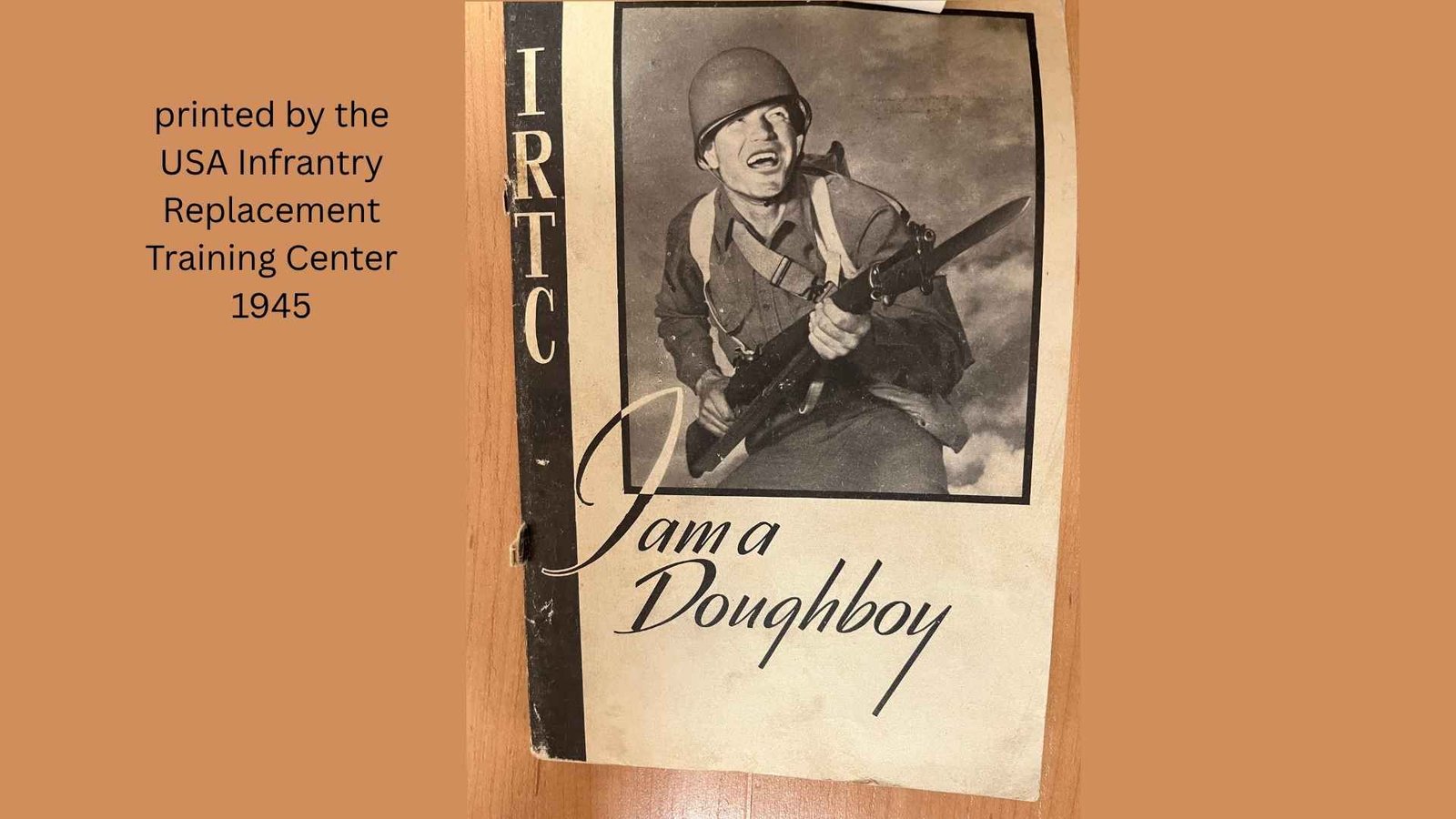
On July 11, 1944, my late father-in-law, Richard Richmond, received his Selective Service notice to report for a pre-induction physical examination. One year later, on July 12, 1945, he arrived at Fort Blanding, Florida, for training. His tattered, brown scrapbook includes the 64-page manual titled “I Am a Doughboy.”
This book begins with the words: "I am training to be an infantryman. I am proud, for I know that when the last enemy stronghold is captured, it will be an infantryman, supported on the ground and in the air by thousands of other men, who will have captured that stronghold and held it.”
Unlike today’s technology-rich, specialized warrior, the number of infantrymen often determined whether a war was won or lost. War correspondent Ernie Pyle wrote, “I love the infantry because they are the underdogs. They are the mud-rain-frost-and-wind boys. They have no comforts and they even learn to live without necessities. In the end, they are the guys wars can’t be won without.”
I Am a Doughboy describes the expectations for yesterday’s soldier:
“As an infantryman, I must be a many-skilled soldier, more than a rifleman, a machine gunner, or a cannoneer. I must learn all that is necessary to achieve success in battle, to defeat and capture or destroy the enemy.
To be part of a winning team in combat, I must learn obedience, to take orders and to obey, to respect my officers as well as my comrades. I must learn military courtesy and the customs of the service, how to salute and when to salute, how to live with other men in order to help them and, in turn, to receive help from them.
As soon as I have learned how to take care of myself, I must learn how to take care of what Uncle Sam has given me. I must know how to care for my clothes and equipment. Waste means delay in my study to become a soldier.
After I have learned how to live, I must learn how to fight."
Private Richmond
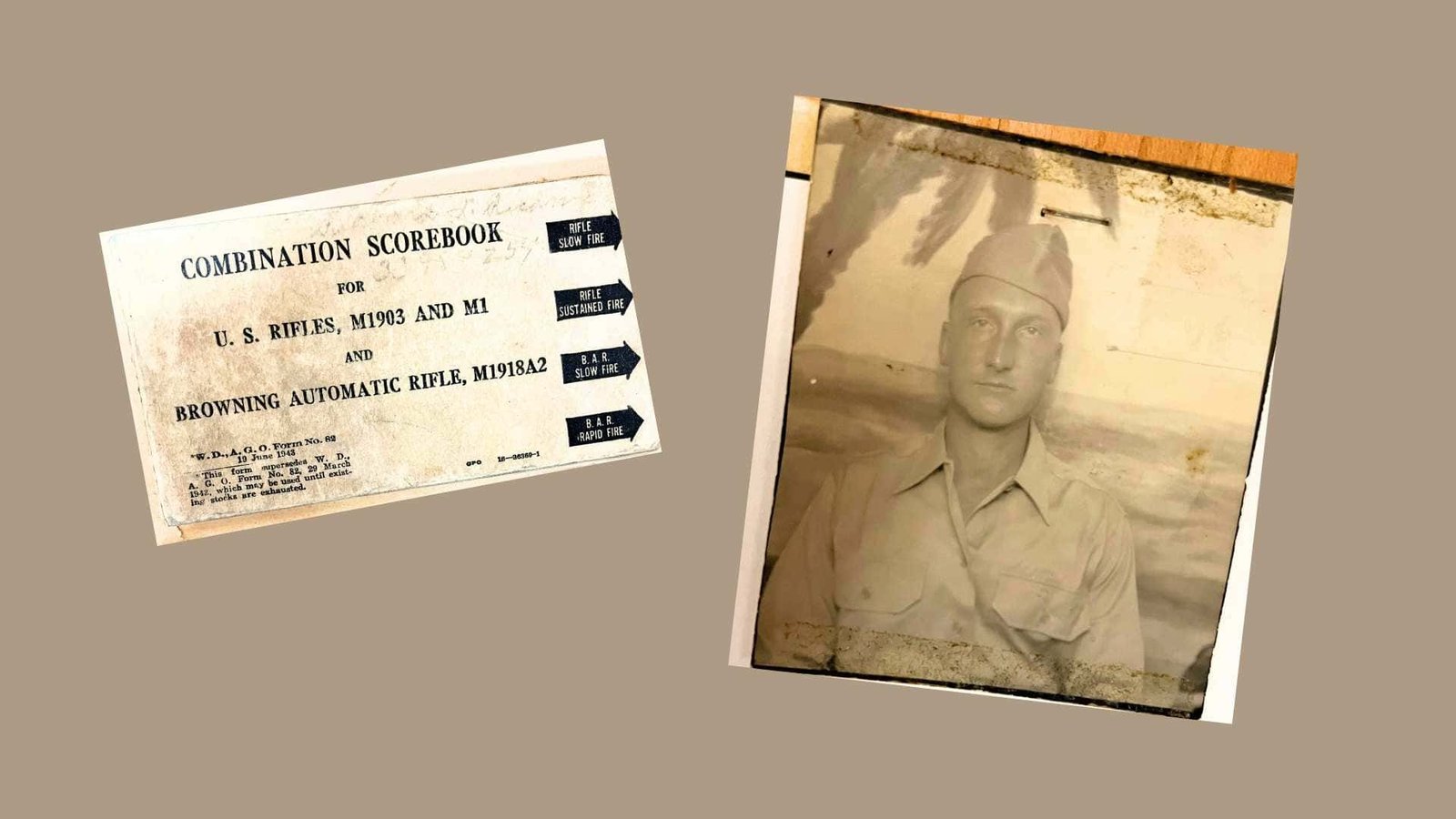
Richard trained in a rifle company. “Each squad is made up of a squad leader, an assistant squad leader, and an automatic rifle team of three men, and seven riflemen.”
Training as a doughboy included learning to handle all the weapons assigned to his squad, including the automatic rifle, machine gun, bayonet, 60-mm mortar, and grenades. Training also included serving as an ammunition bearer, reading maps and using the compass, moving with stealth and secrecy, and team training.
Other doughboys trained in heavy weapons, cannons, and tanks,
Richard later attended an eight-week counterintelligence course in Baltimore, Maryland, where he studied German, interrogation, lock picking, photography, surveillance, investigation, and law. He may have been assigned to this school because he had previously worked as a high school math and science teacher, coach, and camera club supervisor.
During his term of service, Private Richmond received $6.90 per month, all of which was sent home to his wife, Ruth, in Pleasant Valley, PA. Ruth was caring for their two young daughters at the time. Virginia was five years old. Sylvia was three. Virginia doesn’t remember details about her father’s time in the army, but she said, “Whatever he did, he tried to excel at it. He wanted to be the best in everything.”
A New Mission
After V-E Day in May 1945, the Adjusted Service Ratings point system was revised to determine which soldiers would return home first. Points were awarded for time in service, overseas service, time in combat, and having children at home. Disabilities, extreme hardship, and family emergencies also qualified for early discharge. Any service member with three or more children was eligible for early discharge regardless of other factors.
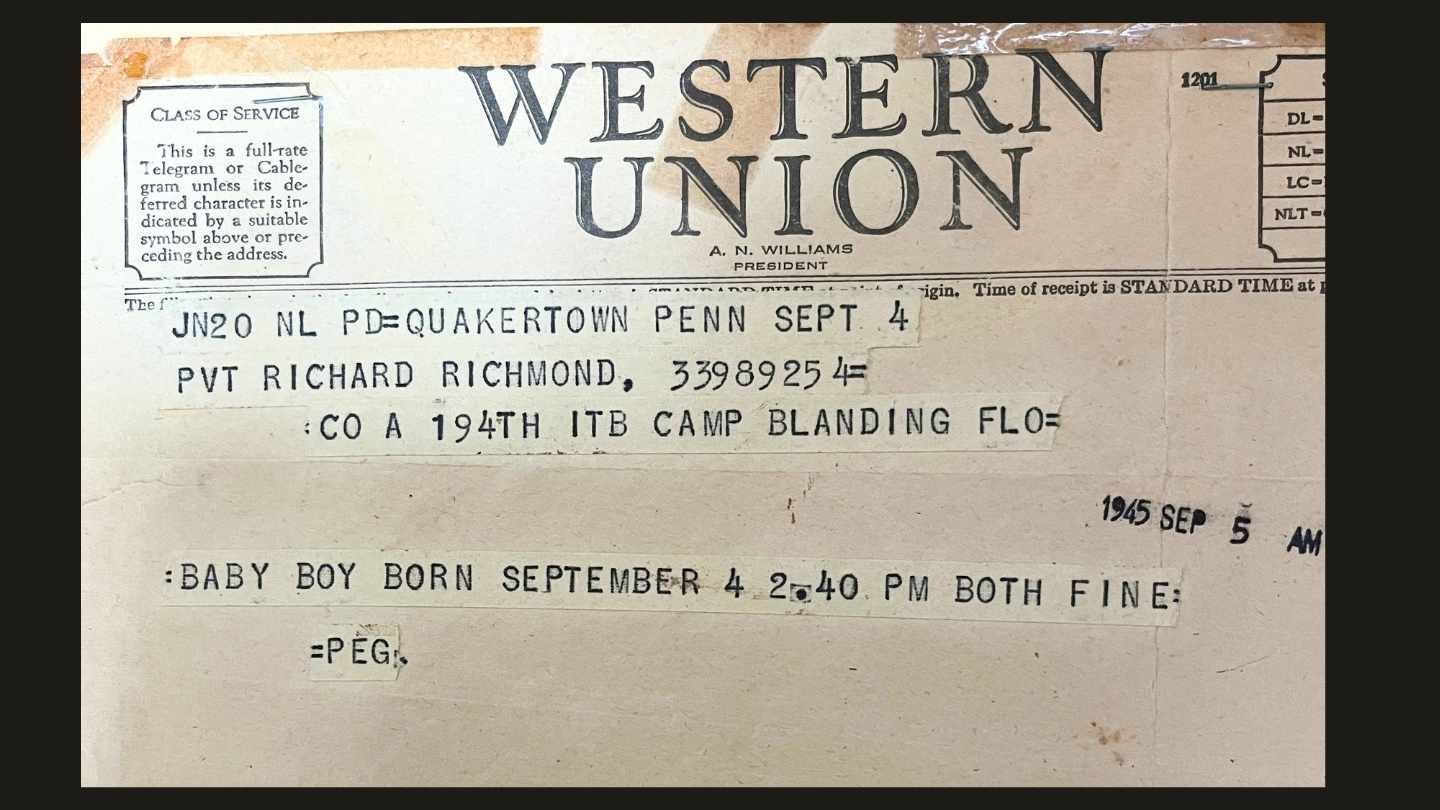
On December 13, 1945, while training at Indiantown Gap, PA, Richard received a telegram from Quakerstown, PA, stating, "Baby boy born September 4, 2:40 p.m.; both fine." He was honorably discharged before completing his term of service.
Richard’s third child, Edward, qualified him for a ticket home to care for his family. He would likely need the doughboy’s military training in the years ahead. His fifth child, my future husband, would be quite a handful.
